When is the best time to visit Puerto Pirámides?
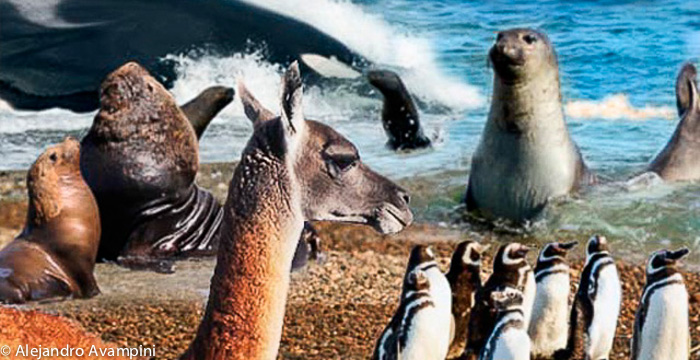
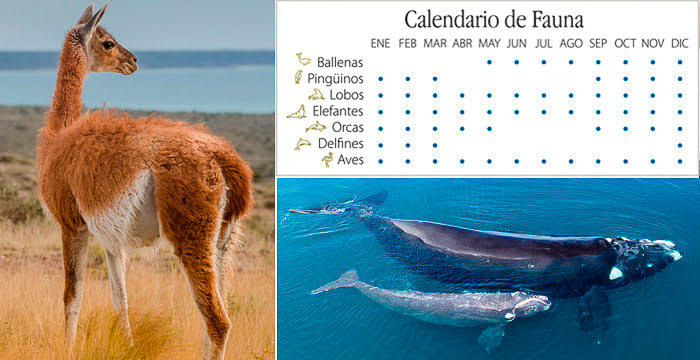
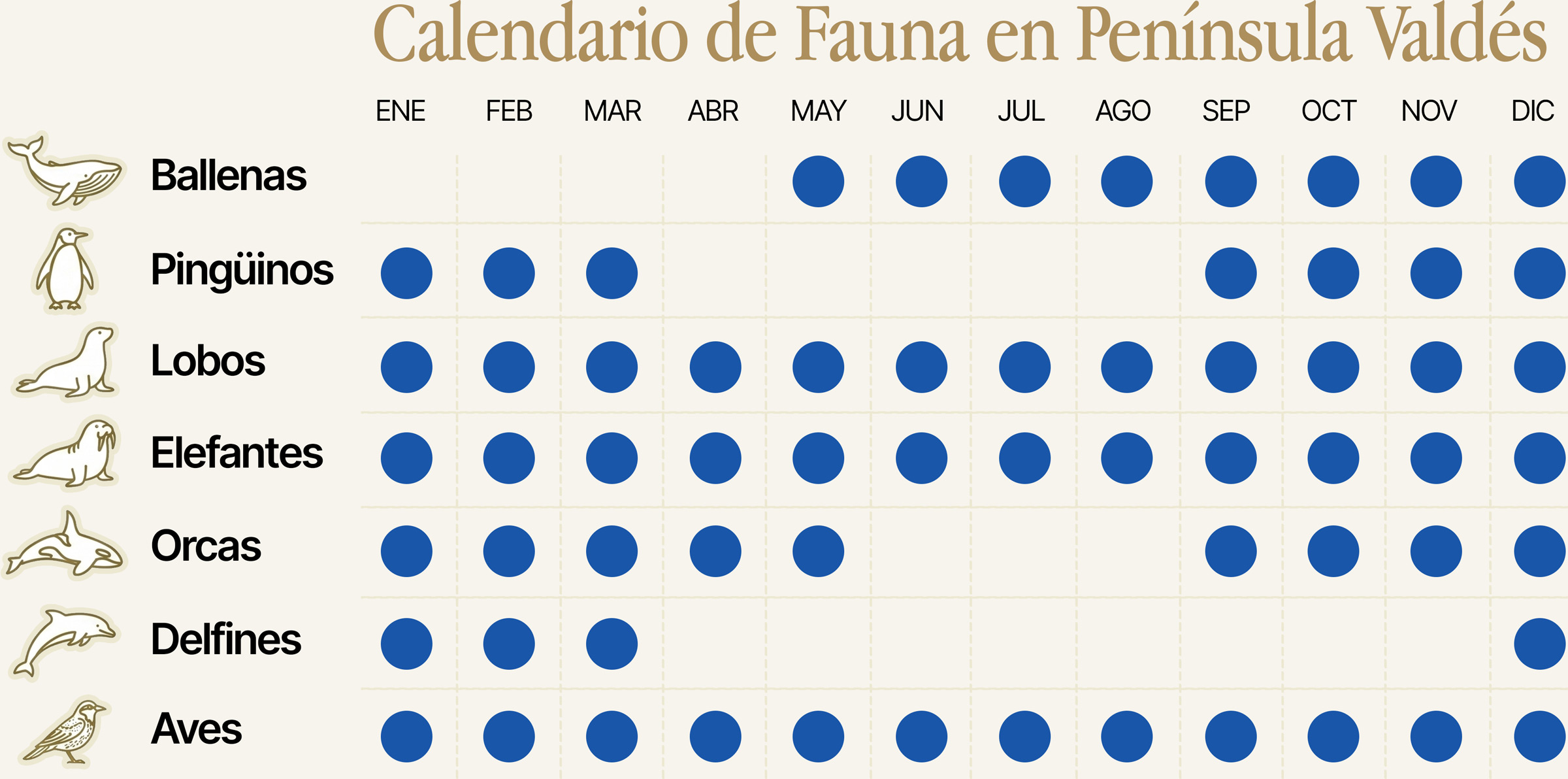
The richest period runs from September to April. During these months, whales, penguins, elephant seals, sea lions, orcas, and dolphins can all be seen at the same time. Del Nómade remains open during these dates.
The months from May to August are more austere: the weather is harsher and several of the main protagonists have either not yet arrived or have already left. For this reason, our Eco Hotel remains closed during the winter.
If you can only come outside of the season, whales can be seen starting in June, and that justifies the trip either way, but you should know that the rest of the cast hasn’t arrived yet.
Marine Wildlife

Southern Right Whale
More than 2,000 southern right whales visit Península Valdés every year. They begin arriving between April and June, and by the end of December the last ones can still be seen before they head off to their feeding grounds. The Peninsula is considered the largest maternity ground in the world for this species. Mothers arrive pregnant or with calves, males arrive looking to mate, and the result is a concentration of behaviors unlike anywhere else on the planet. Boat-based whale watching departs from Puerto Pirámides, the only authorized port in the entire reserve.

Magellanic Penguins
More than 500,000 Magellanic penguins arrive at Península Valdés every year in September to breed, raise their chicks, and molt. They stay until April. The Punta Norte colony is one of the largest in the world, and seeing it in full season, with tens of thousands of juveniles molting at the same time, is one of those spectacles that’s hard to put into words.

South American Sea Lion
South American sea lions are permanent residents of Península Valdés. They are present year-round, although they move between colonies depending on the season. In December, males form harems of between 2 and 12 females at the breeding colonies. Between January and February, the pups conceived the previous year are born. A few months later, those pups are already playing in the surf without much caution, which makes them a favorite target for orcas between March and April at Punta Norte.

Orca
Only about 30 orcas frequent Península Valdés, grouped into families of around 5 members. They have two well-defined seasons. Between March and April they appear at Punta Norte, when sea lion pups begin to move away from their mothers to play in the surf. Between October and November they move to Caleta Valdés, where newborn elephant seal pups expand their menu. The intentional stranding maneuver, in which the orca launches itself onto the beach to capture its prey, is a technique practiced only by these orcas, on these shores. Nothing like it exists anywhere else in the world.

Southern Elephant Seal
Península Valdés is the world’s only mainland breeding site for elephant seals. They arrive between September and December: first the males to mark their territory, then the pregnant females, who give birth on the beach just days after arriving. During this period, the concentration of animals in the colonies is impressive. Pups gain 4 kg per day while nursing. When they are around two and a half months old, they enter the sea on their own. That’s the moment the orcas wait for at Caleta Valdés.

Dusky Dolphin
The dusky dolphin frequents the waters of Península Valdés throughout the year, though with greater likelihood and in greater numbers during the summer months. They are acrobatic, curious, and easy to approach from a boat. In January and February, they enter Golfo Nuevo and San José Gulf in large groups, drawn by anchovies, forming pods that can exceed 100 individuals.
Birds of Península Valdés
The variety of coastal environments creates ideal conditions for dozens of species. Isla de los Pájaros (Bird Island) is the most emblematic spot.
From the boardwalks you can see southern flamingos, imperial cormorants, South American terns, and other species without disturbing the colonies. Rock cormorants stay on their cliffs year-round. The burrowing parakeet appears in spring and summer. The South American tern nests in December and disappears from March onward.
Among the species that can be observed in the reserve:

Imperial Cormorant, Lesser Rhea, South American Tern, Chilean Flamingo, Elegant Crested Tinamou, Royal Cormorant, Kelp Gull
Terrestrial Wildlife
The terrestrial wildlife of Península Valdés is less visible than the marine wildlife, but it’s worth paying attention to it.
The guanaco is the largest land vertebrate in Patagonia. Since hunting is prohibited within the reserve, the guanaco population in Península Valdés is much higher than in the rest of Patagonia.
The mara is a rodent found only in Patagonia. In September and October you can see the young.
The peludo, a Patagonian armadillo, is more elusive but appears on the gravel roads.
The small gray fox is often seen at dusk near the town.
The steppe is also home to wildcats, red foxes, and pichis, among others.

Guanaco, Peludo, Small Gray Fox, Mara
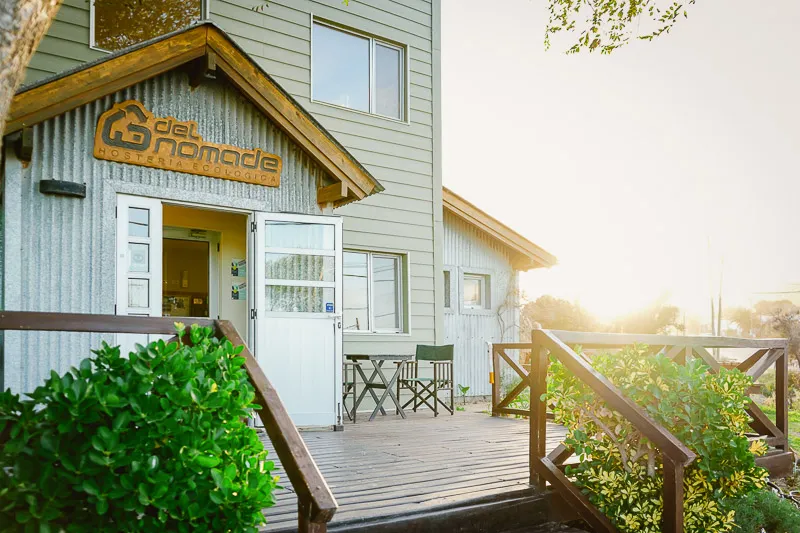
Already know which season you want to come? Ask us, we’ll help you choose the ideal days according to the wildlife calendar and guarantee your spot at del Nómade.
How many days do you recommend staying?
The ideal amount of time to make the most of Puerto Pirámides and its surroundings is 3 nights minimum. Weather conditions can close the port on any given day, and missing a sighting because you rushed the trip is a shame that’s easily avoided by allowing enough time. Península Valdés has a lot to explore: Punta Norte, Caleta Valdés, Punta Delgada, Isla de los Pájaros. Each of these destinations is more than 60 km of gravel road from town, and each one is worth a full day.
Puerto Pirámides is a town of 700 residents. There’s no shopping, no movie theater, no traffic lights. What there is, is nature, silence, stars, and the sound of whales breathing at night. For anyone coming looking for that, three days go by fast.